The book I keep buying for other people
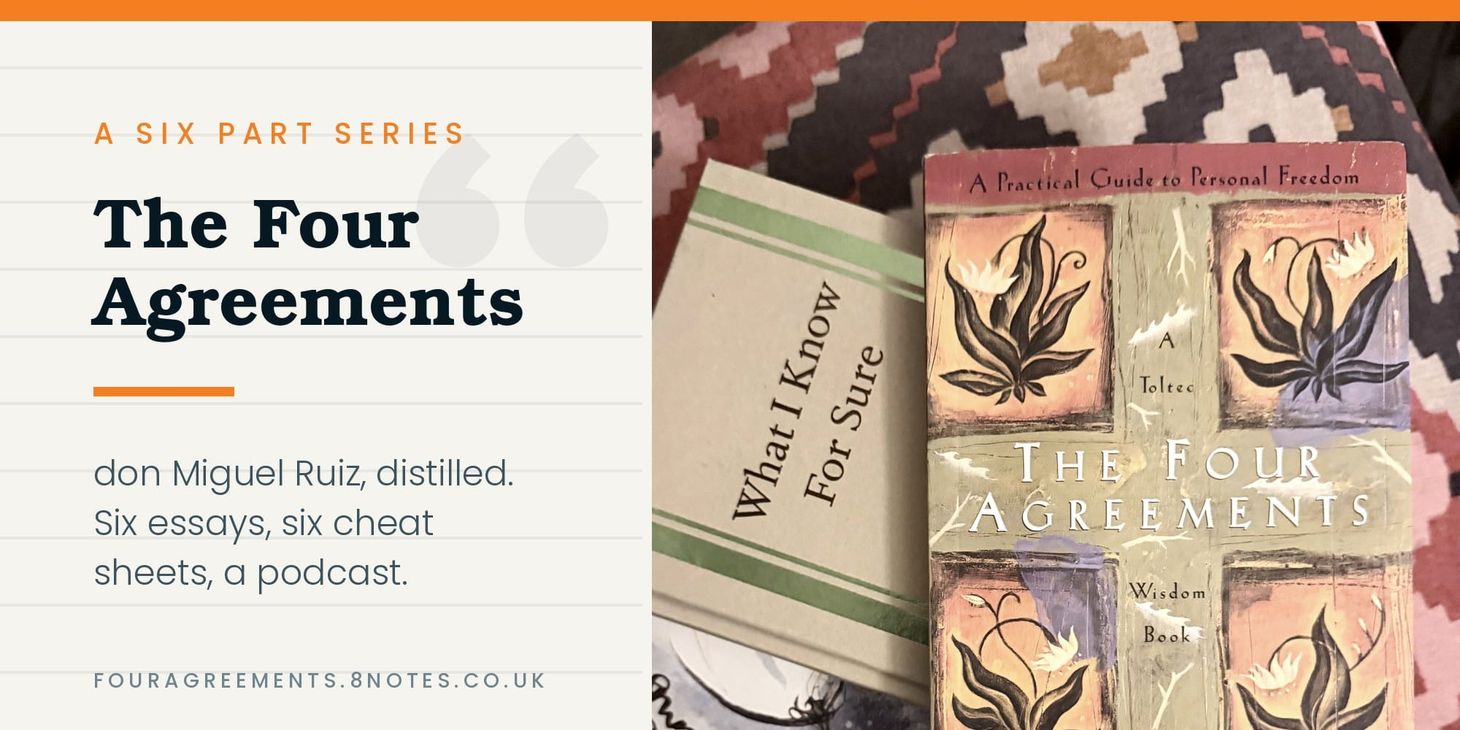
I've lost count of how many copies of The Four Agreements I've given away. I keep a stack at home. My own copy is covered in the kind of underlining you do when you're not really reading, you're enthusiastically recognising.
I first picked it up at one of the lowest points of my adult life. I didn't understand all of it. Something in me knew it anyway.
It's a hundred and thirty-eight pages. You can finish it in an afternoon.
That's the trap.
Simple is not the same as easy
You could print the four agreements on a postcard. Read them once and you'll understand every word. There's nothing complicated in the language and nothing you'd argue with.
Then you try to live one of them for a week.
The difficulty isn't in the ideas. It's that each agreement asks you to notice something you've been doing automatically since childhood, and automatic things don't announce themselves. You can agree with the whole book and change nothing, because agreeing happens in a part of you that isn't running the show.
There's a second problem, and I'd rather name it than pretend it isn't there. Ruiz writes from Toltec tradition, and the vocabulary that comes with it can create distance. The Dream of the Planet. The nagual. Mitote. The first time I read those passages I understood the words and had no idea what they were pointing at. If you're allergic to the esoteric, and plenty of people I work with are, that's usually where the book gets closed.
Which is a shame, because underneath the vocabulary he's describing psychological mechanics that hold up completely.
What I've done with it
I've written six pieces. One for each agreement, plus the foundational chapter that makes the rest make sense, plus a closing piece on actually living this.
The work I've done is translation. Where Ruiz says something in a spiritual register, I've tried to say the same thing in the language of the coaching room, and to bring in the people who've helped me understand what he was getting at. Professor Steve Peters on why you are not your thoughts, and the shift into metacognition that you can't un-see once it's happened. The nervous system, and what your own self-talk does to it. Brené Brown on shame. Terry Real on what happens between two people when one of them stops using language as a weapon.
Some of it is my own material. There are things in these pieces I haven't written about publicly before.
It's a companion, not a replacement. If any of it lands, go and buy the book. It costs less than lunch.
Where to find it
Everything lives at fouragreements.8notes.co.uk. Six episodes, one a week. Each comes with a free two-page cheat sheet you can actually keep, and links through to the full essays.
I've also recorded them. If you'd rather listen than read, they're on The 8Notes Reading Room wherever you get your podcasts, and the first two episodes are embedded below.
Start at the beginning. The first piece isn't about any of the agreements. It's about the thing they're all correcting.
If you want to go further with this in company rather than on your own, the waiting list for 8Notes is open.

Adrian Melrose Newsletter
Join the newsletter to receive the latest updates in your inbox.